Boating Safety on Lake Lewisville and Lake Texoma: What Every Boater Needs to Know | North Texas Boating

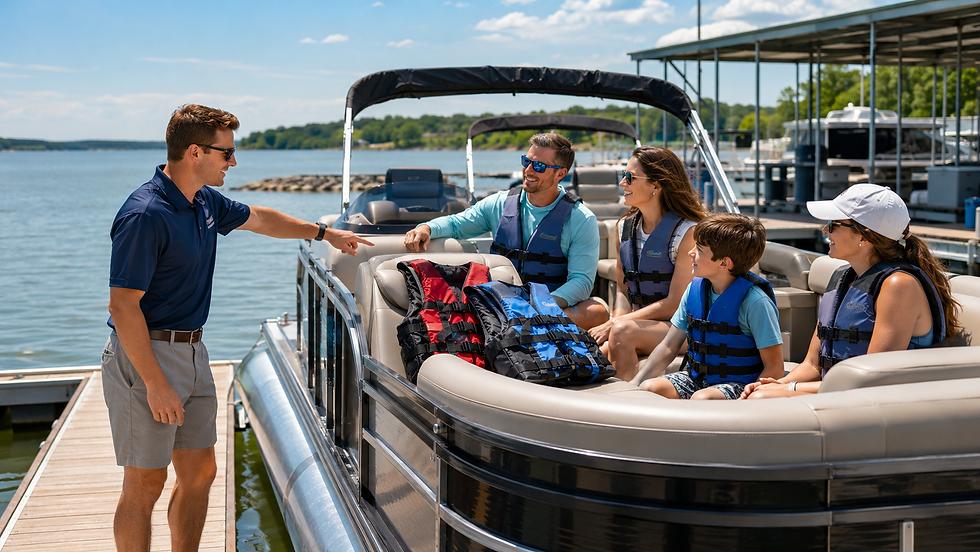
Most boating accidents are preventable. The ones that happen on Lake Lewisville and Lake Texoma almost always involve one of the same handful of factors: life jacket non-compliance, weather that came up faster than expected, alcohol, or a situation the operator wasn't trained to handle. This guide covers all of it, specific to these two lakes.
We run this training through our Coast Guard Captain program with every new Freedom Boat Club member. We're putting it here publicly because we think everyone on either lake is better off knowing it - member or not.
A safer lake is better for everyone who uses it.
Texas Boating Laws: What You're Required to Know
Life Jackets Required for All Children Under 13
Texas law requires all children under 13 to wear a properly fitted, Coast Guard-approved personal flotation device at all times while aboard a moving motorized vessel. Oklahoma enforces the same requirement on Oklahoma waters of Lake Texoma. This is the single most important safety rule on both lakes.
Boater Education Certificate Required for Most Operators
Anyone born on or after September 1, 1993 who operates a motorboat with more than 15 horsepower in Texas must carry a valid boater education certificate.
Boating Under the Influence
Boating under the influence (BUI) in Texas is treated as seriously as DUI. The legal limit is 0.08% BAC.
Zebra Mussel Compliance: Clean, Drain, Dry
Zebra mussels are established in both Lake Lewisville and Lake Texoma. Texas law requires all boaters to drain all water from the boat, motor, bilge, livewells, bait buckets, and any other water-holding equipment before leaving either lake. Everyone should be mindful - but our dock takes care of that for you.
No-Wake Zones
Both lakes have clearly marked no-wake zones around marinas, swim areas, boat ramps, and near shore in certain areas.
The Texoma Weather Warning: The Thing That Surprises Everyone
Lake Texoma's 89,000 acres of open water, combined with North Texas's flat geography and prevailing south winds, creates weather conditions that can change faster than any other recreational lake in the region.
Wind Speed Condition on Main Lake Recommendation
0-10 mph | Ideal - Glass to light chop | All boat types, all areas. Best Boating of the day. |
10 - 15 mph | Good - Manageable chop | Tritoons and center consoles handle well. Pontoons notice it - stay alert |
15 - 20 mph | Caution - Building 1-2 ft waves | Move to protected coves and arms. Consider heading in if you're on a pontoon |
20 - 25 mph | Rough - 2-3 ft waves | Recreational boating on the open water is uncomfortable and risky. Head to the dock. |
25+ mph | Dangerous - 3 + ft waves | Do not launch. If already out, move to protected water immediately and wait it out. |
The Texoma Wind Rule: Check the wind forecast before every Texoma trip, not just the temperature, not just the general weather. Search the specific wind forecast for Denison, Texas or Pottsboro, Texas. Have a plan for where you'll go if conditions build: the Washita arm, the Big Mineral arm near Hagerman, and the coves around Preston Bend are all significantly calmer than the main lake. Experienced Texoma boaters always have a backup cove before they leave the dock.
Lake Lewisville is far more forgiving. Its smaller size and more enclosed geography mean wind conditions build less dramatically. Thunderstorms are the primary concern on Lewisville — lightning on an open lake is genuinely dangerous. Get off the water and to a covered structure when lightning is visible.
Man Overboard: The Procedure Every Operator Must Know
Throttle to neutral immediately
Your first action must be cutting the throttle. A propeller at speed is fatal. Neutral first, always.
Assign someone to keep eyes on the person in the water Point and do not lose visual contact. Designate one person specifically - their only job is to watch and point. In choppy water, a person in the water disappears from view fast.
Throw a flotation device immediately Every boat has a throwable life ring or cushion - this is federal law. Throw it toward the person immediately. It gives them something to hold and makes them easier to see.
Approach slowly from downwind or downcurrent Come at them with the wind or current pushing you away from them. Approach speed: idle only. Cut the engine completely before they can reach the propeller. Never approach a person in the water at speed.
Assist from the boat - do not enter the water A drowning person in panic can pull an untrained rescuer under. Extend a paddle, a rope, or the swim ladder. If the person is unconscious, call 911 immediately.
After recovery, assess for cold shock and injuries Even in summer, a sudden immersion can cause cold water shock response. Get the person warm and dry, assess for any injuries, and call for emergency services if there is any doubt about their condition.
Sun, Heat, and Dehydration: The Underestimated Hazards
The most common medical issues on both lakes in summer are sunburn, heat exhaustion, and dehydration particularly in children and people not used to extended sun exposure.
- Water reflects UV radiation from below while the sun hits from above. Apply SPF 50 before launch and reapply every 90 minutes. Most people apply once and that's not enough for a full day.
- Dehydration happens faster on the water than on land due to heat, sun, and physical exertion. Alcohol accelerates it significantly. Drink water consistently, not just when you feel thirsty.
- Heat exhaustion symptoms include heavy sweating, weakness, cold and pale skin, a weak pulse, nausea, and fainting. Move the affected person to shade, cool with wet cloths, give water if conscious. Heat stroke; hot dry skin, confusion, loss of consciousness; call 911 immediately.
- The combination of sun, heat, dehydration, and alcohol produces impairment that exceeds what the individual factors suggest. Moderation and hydration are the practical answers.
Pre-Launch Safety Checklist
Life jackets for all children under 13: fitted, worn, on before moving
Adult life jackets: on board and accessible for all passengers
Throwable flotation device: on board and reachable
Boater education certificate: in your wallet and on the boat
Weather forecast checked: temperature and wind speed specifically
Fuel level confirmed before departure
Phone charged, emergency contacts shared with someone onshore
Drain plug in
For Texoma: know where your backup protected cove is before you leave
How Freedom Boat Club Handles Safety: Every Freedom Boat Club member completes on-water safety training with a licensed Coast Guard Captain before their first independent reservation. The training covers all of the scenarios in this post from man overboard, weather response, docking, to emergency procedures on an actual boat on the actual lake. Additional training sessions are free and unlimited. Safety knowledge is part of what the membership includes, not an add-on.
Frequently Asked Questions
Do children need life jackets on Lake Lewisville and Lake Texoma?
Yes. Texas law requires all children under 13 to wear a properly fitted Coast Guard-approved life jacket at all times on a moving vessel on Texas waters. Oklahoma enforces the same requirement on Oklahoma waters of Lake Texoma. The life jacket must be sized for the child's weight and fit snugly.
Do I need a boating license in Texas?
Texas requires a boater education certificate for anyone born on or after September 1, 1993 who operates a motorboat with more than 15 horsepower. The certificate must be carried on the boat. Game Wardens check compliance regularly on both Lake Lewisville and Lake Texoma.
Are zebra mussels in Lake Lewisville and Lake Texoma?
Yes. Zebra mussels are established in both lakes. Texas law requires boaters to drain all water from their boat, motor, bilge, livewells, and any water-holding equipment before leaving either lake. Clean, Drain, Dry is mandatory and enforced at boat ramps.
Is Lake Texoma dangerous?
Lake Texoma is safe when respected. Its size means wind and weather can build significant wave conditions faster than smaller lakes. Always check the wind forecast, know where the protected coves and arms are, and have a plan for deteriorating conditions. Winds above 20 mph on the main body are genuinely rough for recreational boats.
What do I do if someone falls overboard?
Throttle to neutral immediately. Assign someone to maintain visual contact. Throw a flotation device. Approach slowly from downwind. Cut the engine before the person can reach the propeller. Assist from the boat; do not enter the water unless you are a trained rescuer. Call 911 if the person is unconscious or in distress.
Learn it on the water, not from a website.
Freedom Boat Club members receive unlimited on-water safety training from licensed Coast Guard Captains. Call or text 972-532-1901.
Comments